
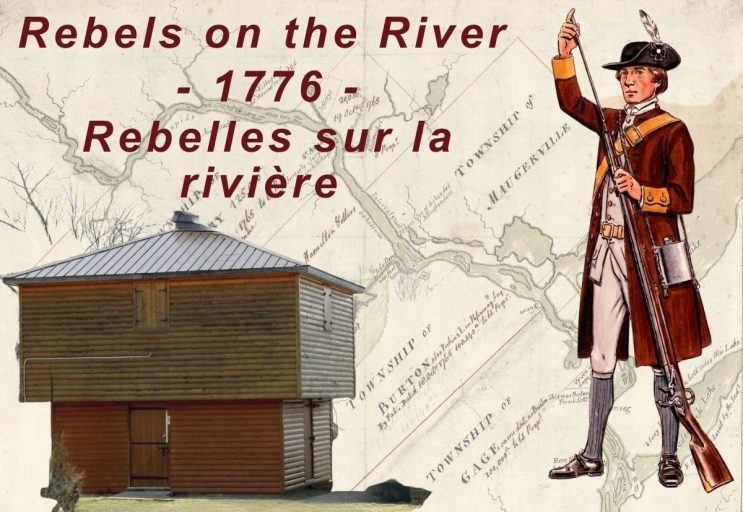
 (Fredericton NB, June 30, 2026 – FOR IMMEDIATE RELEASE). 1776 was a watershed year for Canada. In the American colonies to the south, grievances against the British Crown had grown to the point of open rebellion. That year previous, in 1775, skirmishes in Massachusetts — at Lexington, Concord, and Boston — had set the stage for revolution. When the Declaration of Independence was signed on July 4, 1776, rebellion in the Thirteen Colonies had reached a point of no return.
By 1776, many of the residents living in present-day New Brunswick were also speaking of rebellion. Having settled along the fertile soil of the St. John River/Wolastoq in the 1760s, the Planters (as they were often known) established flourishing communities at Maugerville, Sheffield, Gagetown, Lincoln, and elsewhere — all along the river. Many of these settlers had family and friends in Massachusetts — as well as elsewhere in New England. When open rebellion broke out in Massachusetts in 1775, settlers along the St. John River/Wolastoq were faced with a difficult decision: join the rebellion or remain loyal. Those who supported the revolution were called “Rebels,” while those who did not, were called “Loyalists.” The Planters in Maugerville joined the revolutionary furor and revolted on May 14, 1776. The Thirteenth-and-a-Half Colony had rebelled! The Fredericton Region Museum’s new travelling exhibition Rebels on the River – 1776 – Rebelles sur la rivière explores their story.
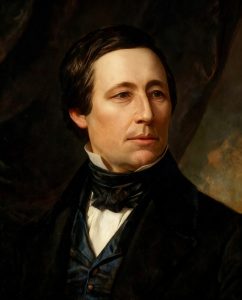 In honour of historic events following May 14, 1776, the Fredericton Region Museum will launch this new travelling exhibition on July 5 at 2:00 pm in the museum. Curated by military historian Dr. Gary Campbell, Rebels on the River reveals fascinating local connections to the American Revolution and 1776 – “the year that changed everything” for present-day Canada.
Our region of New Brunswick was invaded twice by New England rebels. The first invasion was in the fall of 1776, when Jonathan Eddy led an attack on Fort Cumberland (formerly Fort Beausejour). For this assault he obtained rebel support from both Maugerville and Ekpahak (present-day Kingsclear).
The second rebel invasion was in June of 1777, when Colonel John Allan also invaded the area and attacked Portland Point (present-day Saint John). He obtained rebel support from the community of Ekpahak (located just above present-day Fredericton). Colonel Allan and his force also found that most residents along the river were friendly to the rebel cause.
Rebels on the River – 1776 – Rebelles sur la rivière takes you back in time to understand what happened here between 1776 and 1778. “Had Eddy or Allan been successful in their missions” — Gary Campbell explains — “it’s quite possible that New Brunswick might well have become a state of the union. It is interesting to speculate as to what could have happened, had events unfolded differently.” A link to Gary Campbell’s full interview with CBC’s Vanessa Vander Valk can be found on the CBC Shift site here.
All are welcome to attend the official opening of this new travelling exhibition at the Fredericton Region Museum on July 5 at 2:00 pm. Of special interest will be the participation of DeLancey’s Brigade — Revolutionary War Re-enactors in Officers’ Square. The Fredericton Region Museum gratefully acknowledges funding provided by the City of Fredericton (Arts, Culture and Heritage Funding Program), Province of New Brunswick (Department of Culture and Heritage), and the York-Sunbury Historical Society.
As of June 29, the museum is now open summer hours: Monday to Saturday 10 am to 5 pm, Thursdays until 7 pm (half-price admission after 5pm), and Sundays from 12 noon until 5pm.
For more information, please contact:
Alena Krasnikova, Executive Director
Fredericton Region Museum www.frederictonregionmuseum.com
Email: frederictonregionmuseum@gmail.com or phone 506-455-6041
The Fredericton Region Museum acknowledges the unceded and unconquered territory of Wəlastəkokewiyik / Wolastoqiyik. The Fredericton Museum, located in Ekwpahak | Fredericton, sits on lands designated by the Peace and Friendship Treaties of 1725-1779. These treaties did not deal in the transfer of land, rather they laid a foundation for what was to be an ongoing nation-to-nation relationship between the British Crown and Indigenous Peoples.
![Pointe Sainte-Anne 1692-1759 [Français]](https://www.frederictonregionmuseum.com/wp-content/uploads/2019/09/Pointe-Sainte-Anne-Logo_Color-500x383.jpg)
Leave A Comment